
From 90 Cents to the "Potato King of the World": A Financial Literacy Case Study in Grit, Capitalism, Innovation, and Opportunity

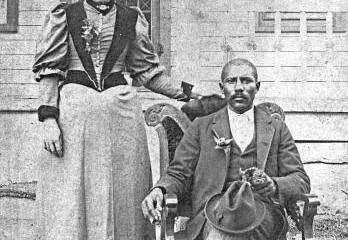
As a financial literacy teacher, I am a big believer in case studies. History is filled with examples of individuals who achieved financial freedom through grit, determination, innovation, capitalism, and yes, sometimes a little luck. One of the greatest examples you may have never heard of is the story of Junius George Groves.
Imagine walking 500 miles with only 90 cents in your pocket.
Now imagine that just 25 years later, a major railroad company builds a special rail line directly to your farm because you are producing more potatoes than anyone else on Earth.
That is exactly what happened to Junius George Groves.
From Slavery to Freedom
Junius Groves was born into slavery on April 12, 1859, in Green County, Kentucky. His mother, Mary, was enslaved by one of Kentucky's largest slaveholders, while his father, Martin, was enslaved on a nearby plantation. His father later enlisted during the Civil War and died while serving.
The Emancipation Proclamation brought freedom to Junius when he was six years old. Yet freedom did not mean prosperity. Like many newly freed Americans, he faced enormous challenges, poverty, discrimination, and limited economic opportunities.
At age 20, Groves made a life-changing decision. In 1879, he joined the movement of Black Americans known as the Exodusters and left Kentucky for Kansas. He walked approximately 500 miles carrying only 90 cents.
Starting with Almost Nothing
Kansas was not easy.
Jobs were scarce and wages were low. Groves initially worked in meatpacking plants earning just 40 cents a day. Through hard work and reliability, he increased his earnings to 75 cents a day, but he wanted more.
Eventually, he found work on a farm near Edwardsville, Kansas. The farmer, Jake Williamson, recognized something special in Groves—an exceptional work ethic and a willingness to learn.
Williamson offered him an opportunity: nine acres of land under a sharecropping arrangement.
Most people would have simply followed traditional farming methods.
Junius Groves did something different.
Innovation Creates Wealth
Groves became a student of agriculture.
He experimented with planting techniques, soil conditions, crop rotation, irrigation, and timing. He carefully studied what worked and what didn't.
While neighboring farmers averaged approximately 25 bushels of potatoes per acre, Groves eventually achieved yields of 396 bushels per acre.
Think about that.
He wasn't working harder than everyone else. He was working smarter.
That difference is one of the most important lessons in financial literacy. Wealth is often created when hard work is combined with innovation.
By 1884, just five years after arriving in Kansas with 90 cents, Junius and his wife Matilda purchased 80 acres of farmland.
The foundation of wealth had been established.
Scaling Success
Over the next decade, the Groves family continued to acquire land and expand operations.
By 1895, their agricultural holdings included:
400 acres of potatoes
170 acres of apple orchards
160 acres of corn
50 acres of cherry trees
Their success allowed them to replace a modest one-room cabin with a stunning 22-room mansion equipped with electricity, hot and cold running water, and a ballroom.
The mansion cost approximately $5,000—a tremendous amount of money at the time.
Yet Groves was just getting started.
The Potato King of the World
In the early 1900s, Junius Groves produced an astonishing 721,500 bushels of white potatoes in a single year.
No individual grower in the world had ever produced more.
His potatoes were shipped throughout the United States, Canada, and Mexico.
Demand became so great that the Union Pacific Railroad built a special spur line directly to his property so potatoes could be loaded onto train cars without leaving the farm.
In 1902, newspapers began calling him "The Potato King of the World."
That title remained with him for the rest of his life.
Multiple Streams of Income
One lesson I teach my students is that wealthy people rarely depend on a single source of income.
Junius Groves understood this long before modern financial advisors began discussing multiple income streams.
In addition to farming, he and Matilda:
Owned a grocery store
Invested in mining operations
Owned stock in banks
Held a majority interest in a casket and embalming company
Operated orchards and vineyards
Developed real estate
He was not merely a farmer.
He was an entrepreneur, investor, innovator, employer, and business owner.
Building Others While Building Wealth
One of the most impressive aspects of Junius Groves' story is what he did after becoming successful.
He never forgot where he came from.
He founded churches, supported community organizations, helped create business associations, and sold affordable land to African American families so they could build wealth themselves.
When segregation prevented Black Americans from using local golf courses, Groves built one of the first golf courses specifically serving African Americans.
His success became a vehicle for helping others succeed.
That may be the greatest lesson of all.
Financial freedom is not simply about accumulating wealth.
It is about creating opportunities for future generations.
The Financial Literacy Lessons
Junius Groves' life teaches several powerful lessons:
1. Start Where You Are
He started with 90 cents.
Your starting point does not determine your destination.
2. Develop Skills
Groves became a master of agriculture through study and experimentation.
Knowledge creates opportunity.
3. Think Differently
He achieved extraordinary results because he challenged conventional methods.
Innovation often produces outsized rewards.
4. Reinvest Success
Instead of spending all his profits, he purchased more land, equipment, and businesses.
Assets create wealth.
5. Build Multiple Income Streams
His wealth came from farming, retail, investments, real estate, and business ownership.
Diversification creates financial stability.
6. Lift Others Up
True success includes helping others create opportunities for themselves.
A Story America Should Never Forget
Junius George Groves died on August 17, 1925. More than 3,000 people attended his funeral—the largest gathering in Edwardsville's history.
For decades, his story faded from public memory.
Fortunately, that is changing.
Today, he is recognized as one of the greatest agricultural entrepreneurs in American history and a powerful example of what can happen when determination meets opportunity.
His journey took him from slavery to becoming one of the wealthiest men in Kansas.
From 90 cents to an agricultural empire.
From nine rented acres to hundreds of productive acres.
From poverty to prosperity.
As a financial literacy teacher, I often remind my students that wealth is rarely built overnight. It is usually built through thousands of disciplined decisions made over many years.
Junius Groves is proof that grit, determination, innovation, capitalism, and opportunity can transform a life.
His story is not just about potatoes.
It is about possibility.
#FinancialLiteracy #FinancialFreedom #JuniusGroves #PotatoKing #AmericanDream #Entrepreneurship #Capitalism #WealthBuilding #PersonalFinance #FinancialEducation #SuccessStory #BlackHistory #EconomicOpportunity #GenerationalWealth #Investing #Innovation #Grit #Determination #Leadership #BusinessSuccess #AmericanHistory #TeacherLife #FinancialLiteracyTeacher #MoneyManagement #Inspiration #CaseStudy #WealthCreation #Education #EntrepreneurMindset #FreedomThroughFinance #chairmanbobsuton #bobsuttonbroward.


Comments